 Miriel
Miriel Team · starting solids, food allergies, baby feeding, allergen introduction
How Long to Wait Between New Baby Foods
You don't need a strict 3-day wait for every new food. A short watch matters for Big-9 allergens; plain foods need no long pause—variety counts.
The short answer
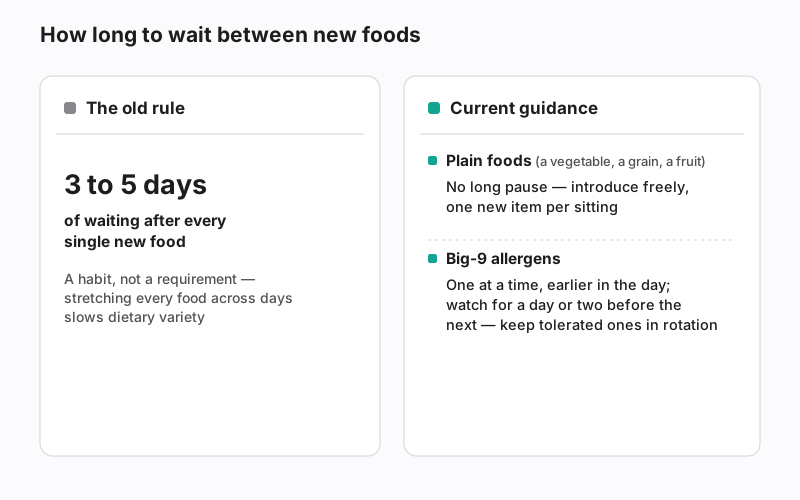
You do not need to wait three to five days after every single new food. For plain, non-allergenic foods—a new vegetable, a grain, a fruit—there is no evidence that a long pause protects your baby, and stretching every food across days slows the dietary variety that early feeding is supposed to build. A short observation window makes sense mainly for the Big-9 allergens: offer the new allergen earlier in the day, keep it to one at a time, and watch your baby for a day or two before adding the next one. The strict wait-for-everything version of the rule is a habit, not a requirement.
That said, some major bodies still print the older wording. The CDC still suggests waiting 3 to 5 days between each new food, and so does the AAP’s HealthyChildren guidance. So this is not “the rule is wrong”—it is “the rule is being re-examined, and the blanket version does more to slow you down than to keep your baby safe.”
Where the 3-day rule came from
The idea is straightforward: introduce one food at a time so that, if a reaction happens, you know exactly which food caused it. That logic is sound for foods that can trigger an allergic reaction. Where it goes wrong is applying it to everything—pears, oats, sweet potato—foods that almost never cause an IgE reaction. Waiting three to five days on each of those means a baby might taste only a handful of foods across an entire month.
The old rule also carried a second, now-outdated assumption: that spacing out or delaying allergenic foods might prevent allergies. It does not. The AAP is explicit that there is no evidence waiting to introduce baby-safe forms of egg, dairy, soy, peanut, or fish beyond 4 to 6 months prevents food allergy. If anything, allergist-led commentary now flags the opposite risk—that a rigid wait can delay peanut introduction and shrink an infant’s food diversity, which is why experts have publicly questioned the need to wait days between new foods.
What current guidance actually says
Reading the guidelines together, three points are stable:
- Introduce one new food at a time so a reaction can be traced to a source. This is about attribution, not calendar days.
- Do not delay allergens for prevention. Common allergens can go in alongside other foods once your baby is eating solids, and there is a specific reason not to wait—see the high-risk note below.
- Variety matters. A wide range of foods, textures, and flavors in the first year is a goal in its own right, and a wait-heavy schedule works against it.
The practical translation: space allergens deliberately, and let plain foods flow more freely.
When a longer, more careful window still makes sense
There are babies for whom slower, pediatrician-guided allergen introduction is the right call. If your child has severe eczema, an existing food allergy, or a strong family history of food allergy, talk to your pediatrician before starting allergens. The NIAID peanut-prevention guidelines single out infants with severe eczema, egg allergy, or both as higher-risk—and recommend evaluation before peanut is introduced, sometimes including allergy testing first. That is a decision to make with a clinician, not from a blog.
This is also where Miriel is deliberately conservative. In the Allergen Introduction Program (Beta), babies with severe eczema or an existing food allergy are routed to their pediatrician before the program unlocks—the app will not walk you into home allergen introduction when the guidelines say a clinician should be involved first. You can read more about sequencing in our guide to allergen introduction order and the step-by-step for one of the trickier ones in how to introduce egg.
What a reaction looks like—and how fast
The reason a short window works is timing. Most IgE-mediated food reactions are fast: the ACAAI notes that most food-related symptoms occur within two hours of eating, and often within minutes. Rare delayed reactions can take longer, but the bulk of what you are watching for shows up the same feeding or shortly after.
Signs to watch for after a new allergen include hives or a spreading rash, swelling of the lips, face, or tongue, repeated vomiting, and any change in breathing. Because reactions are usually quick, offering a new allergen earlier in the day—not right before bed—means you are awake and able to respond during the window when a reaction is most likely.
If you ever see swelling that affects breathing, widespread hives, repeated vomiting, or a limp or unresponsive baby, treat it as an emergency and call your local emergency number. After any real reaction, the next step is your pediatrician—not trying the food again at home. Miriel follows that same rule: severe-reaction logging routes to an emergency call screen, and the app never tells you to re-offer a food after a reaction.
How to space foods without slowing variety
A workable rhythm for a typical, lower-risk baby:
- Plain foods: introduce freely, still one new item per sitting so you can trace anything unexpected, but without parking on it for days. New vegetables and grains can move day to day.
- Big-9 allergens (milk, egg, peanut, tree nuts, soy, wheat, fish, shellfish, sesame): one at a time, earlier in the day, then watch for a day or two before adding the next allergen. Keep an already-tolerated allergen in rotation once it is in.
- Keep a record. The value of one-food-at-a-time only exists if you can look back and see what your baby ate and how they responded.
That last point is where a lot of the old rule’s stress comes from—trying to hold a mental log. If your baby is dealing with digestive changes as solids ramp up, that is common and usually manageable; see constipation when starting solids. For the full sequence of getting started, our starting solids hub walks through readiness, textures, and safe prep.
A word on choking, separate from allergies
One caution the wait rule does not cover: choking risk is about texture and preparation, not spacing. Round, firm, or slippery foods need to be modified regardless of how long you have waited. Learning to tell gagging from choking, and taking an infant first-aid course, matters more than any calendar rule—resources from the American Red Cross and the AAP on choking prevention are a good place to start. Miriel’s gagging-versus-choking safety module is free and always will be.
The bottom line
This article is educational guidance drawn from published feeding guidelines, not medical advice, and it does not replace your pediatrician—who knows your baby’s eczema history, family history, and risk, and should always come first, especially before starting allergens. Use the guidelines to relax the plain-food schedule and to be deliberate, not fearful, with the allergens.
Miriel’s Starting Solids (Beta) logs each new food and any reaction your baby has, so your spacing decisions come from your own child’s record instead of a blanket rule—start with the Starting Solids plan.
References
- Centers for Disease Control and Prevention. When, What, and How to Introduce Solid Foods. CDC Infant and Toddler Nutrition. https://www.cdc.gov/infant-toddler-nutrition/foods-and-drinks/when-what-and-how-to-introduce-solid-foods.html
- American Academy of Pediatrics. Starting Solid Foods. HealthyChildren.org. https://www.healthychildren.org/English/ages-stages/baby/feeding-nutrition/Pages/starting-solid-foods.aspx
- National Institute of Allergy and Infectious Diseases. Addendum Guidelines for the Prevention of Peanut Allergy in the United States: Clinician Summary. NIAID. https://www.niaid.nih.gov/sites/default/files/peanut-allergy-prevention-guidelines-clinician-summary.pdf
- Lurie Children’s Hospital. Experts Question Need to Wait Days Between Introducing New Solid Foods to Infants. Lurie Children’s News. https://www.luriechildrens.org/en/news-stories/experts-question-need-to-wait-days-between-introducing-new-solid-foods-to-infants/
- American College of Allergy, Asthma & Immunology. Food Allergies: Causes, Symptoms & Treatment. ACAAI. https://acaai.org/allergies/allergic-conditions/food/