 Miriel
Miriel Team · peanut, allergen introduction, starting solids, food allergy, infant feeding
When and How to Give Baby Peanut Butter
Most babies can start smooth peanut butter around 6 months. Babies with severe eczema or egg allergy should see their doctor first, near 4-6 months.
Most babies can have smooth peanut butter, thinned or stirred into food, starting around 6 months, alongside other solids. The one big exception: if your baby has severe eczema, an egg allergy, or both, talk to your pediatrician before the first taste, because guidelines recommend introduction around 4 to 6 months but only after your doctor evaluates your baby, sometimes with allergy testing (NIAID Addendum Guidelines). And never give whole peanuts or a thick glob of peanut butter to a baby or toddler, because those are choking hazards.
That is the whole answer. The rest of this page explains how to know which group your baby is in, how to prepare peanut safely, and why keeping it in the diet matters.
Which risk group is your baby in?
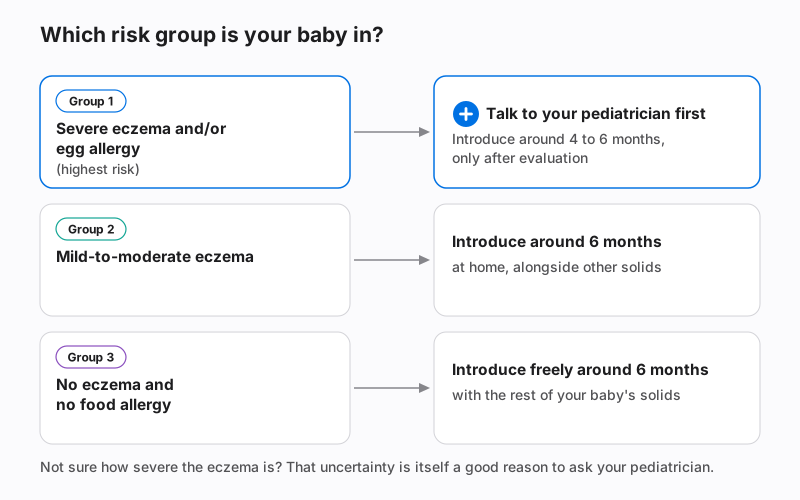
In 2017, an expert panel convened by the National Institute of Allergy and Infectious Diseases (NIAID) laid out three clear paths based on your baby’s eczema and existing allergies. Most parenting sites blur these together; here they are separated (NIAID Addendum Guidelines).
Group 1 - Severe eczema and/or egg allergy (highest risk). Introduce peanut around 4 to 6 months, but only after your baby’s doctor has evaluated them. The panel strongly suggests peanut-specific IgE blood testing and/or a skin prick test first, and in some cases the first feeding happens in a supervised medical setting. This is the group where “see the doctor first” is not optional.
Group 2 - Mild-to-moderate eczema. Introduce peanut around 6 months, at home, alongside other solids. No in-office evaluation is required, though you can always check with your pediatrician if you feel unsure.
Group 3 - No eczema and no food allergy. Introduce peanut freely around 6 months, together with the rest of your baby’s solids, according to your family’s preferences.
If you are not sure how severe your baby’s eczema is, that uncertainty is itself a good reason to ask your pediatrician. Severe eczema generally means widespread, persistent rash needing prescription creams, not the occasional dry patch. The American Academy of Pediatrics summarizes these same three groups in plain language for parents (HealthyChildren.org).
Miriel’s Allergen Introduction Program (Beta) is built around exactly this split. It includes a blocking pediatrician gate: if you tell the app your baby has severe eczema or an existing food allergy, the program routes you to your doctor before peanut and the other allergens unlock. That gate is there on purpose, so the highest-risk babies get seen first rather than starting at home.
Safe forms and amounts
The goal is peanut protein in a texture a baby can safely manage. Whole and chopped peanuts, and thick spoonfuls of peanut butter, are choking risks and should be avoided for young children (HealthyChildren.org). Safe forms include:
- Smooth peanut butter, thinned. Stir 1 to 2 teaspoons into warm water, breast milk, or formula until it is loose enough to mix into other food. A stiff, sticky blob can lodge in a baby’s throat.
- Peanut powder or peanut flour stirred into a puree, oatmeal, or yogurt your baby already accepts.
- Dissolvable peanut puff snacks made for infants, which soften quickly in the mouth.
Skip chunky peanut butter, whole peanuts, and any hard peanut pieces. Whole peanuts in particular stay off the menu until around age 4 to 5, because round, hard foods are among the highest choking risks for little ones (HealthyChildren.org). If you want a clear sense of what normal gagging looks like versus true choking, read our guide on gagging versus choking in babies before you start, and consider an infant first-aid course (American Red Cross child and baby first aid). We never print choking first-aid steps here; hands-on training is what actually prepares you.
What the LEAP trial showed, and what it didn’t
The reason peanut moved from “wait and avoid” to “introduce early” is the LEAP trial. In LEAP, researchers followed more than 600 infants aged 4 to 10 months who were at high risk for peanut allergy because they already had severe eczema, egg allergy, or both. Children who already had a peanut allergy were excluded. Half the babies regularly ate peanut; half avoided it until age 5 (FoodAllergy.org).
Among the high-risk infants studied, about 3% of the peanut-eating group developed a peanut allergy by age 5, compared with about 17% of the avoidance group, a reduction of more than 80% within that trial population (FoodAllergy.org; LEAP, NEJM 2015). The study protocol had the consumption group aiming for roughly 6 grams of peanut protein per week, spread across three or more feedings (Prevent Food Allergies).
An honest read of this: LEAP measured what happened in a specific group of high-risk babies who ate peanut regularly under study conditions. It is strong evidence for early, sustained introduction, and it shaped the NIAID guidelines. It is not a personal guarantee that introducing peanut will prevent your individual baby’s allergy, and no app or feeding plan can promise that outcome. The takeaway parents can act on is simpler: for most babies, introducing peanut early and then keeping it in the diet is supported by the guidelines.
Keep peanut in rotation
Introduction is a start, not a one-time checkbox. The LEAP protocol kept peanut in the diet several times a week, and the guidelines emphasize continued, regular exposure rather than a single taste (HealthyChildren.org). Once your baby tolerates peanut, fold it into the weekly routine the same way you would any other food.
Peanut is also just one of the Big-9 allergens, and the same “introduce early, keep offering” logic applies to egg, dairy, wheat, and the rest. If you are mapping out the whole plan, see our guide on the order to introduce allergens and the companion walkthrough on how to introduce egg. You do not have to introduce every allergen at once, but there is no benefit to delaying any of them.
A note before you start
This article is educational guidance drawn from published feeding guidelines, not medical advice for your specific child. Your pediatrician knows your baby’s eczema, history, and risk, and their guidance comes first, especially for the higher-risk group. When in doubt, ask them before the first peanut taste.
Miriel’s Allergen Introduction Program (Beta) walks peanut introduction step by step, and its pediatrician gate makes sure higher-risk babies see their doctor before the program unlocks; you can start with our Starting Solids hub.
References
- National Institute of Allergy and Infectious Diseases (NIAID). Addendum Guidelines for the Prevention of Peanut Allergy in the United States: Summary for Clinicians. NIH / NIAID. link
- American Academy of Pediatrics. Peanut Allergy: What to Know About the Latest Prevention Guidelines. HealthyChildren.org. link
- American Academy of Pediatrics. When to Introduce Egg, Peanut Butter and Other Common Food Allergens to a Baby. HealthyChildren.org. link
- Du Toit G, et al. Randomized Trial of Peanut Consumption in Infants at Risk for Peanut Allergy (LEAP). New England Journal of Medicine, 2015. link
- Food Allergy Research & Education (FARE). Learning Early About Peanut Allergy (LEAP). FoodAllergy.org. link
- Prevent Food Allergies. 3 Things Parents Need to Know About the LEAP Study. PreventAllergies.org. link
- American Red Cross. How to Perform Child and Baby First Aid. RedCross.org. link