 Miriel
Miriel Team · starting solids, feeding schedule, baby nutrition, weaning, meal frequency
Baby Feeding Schedule: 6 to 12 Months
How much and how often to feed solids: 2-3 meals at 6-8 months, 3-4 at 9-11 months. Milk stays primary under 1. A simple chart.
The short answer
Start with one small solid meal a day at around 6 months, then build to 2-3 meals a day between 6-8 months and 3-4 meals a day from 9-11 months, with 1-2 small snacks added toward the end of the first year if your baby wants them (WHO). Portions are small: 1-2 tablespoons per food early on, working up to a few tablespoons per meal as appetite grows (CDC). Under 12 months, breast milk or formula stays your baby’s main source of nutrition (NHS) — solids are practice and iron, not the main event yet.
That is the schedule. The rest of this post is the detail behind it, a chart you can screenshot, and how to handle the days your baby eats almost nothing.
The chart
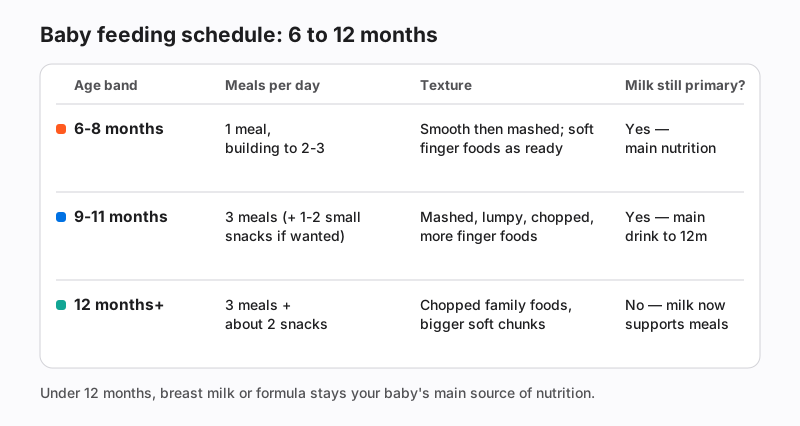
| Age band | Meals per day | Texture | Rough amount per meal | Milk still primary? |
|---|---|---|---|---|
| 6-8 months | 1 meal, building to 2-3 | Smooth then mashed; soft finger foods as ready | 1-2 tbsp, building toward a few tbsp | Yes — main nutrition |
| 9-11 months | 3 meals (+ 1-2 small snacks if wanted) | Mashed, lumpy, chopped, more finger foods | A few tbsp up to ~4 oz / small jar | Yes — main drink to 12m |
| 12 months+ | 3 meals + about 2 snacks | Chopped family foods, bigger soft chunks | Toddler-sized portions | No — milk now supports meals |
Meal counts come from WHO complementary feeding guidance; textures and the “milk first” rule from the NHS weaning pages; portion sizes from the CDC and AAP. Treat every number as a rough guide, not a target to hit.
6-8 months: one meal, then a rhythm
At the start, your baby “only needs a small amount of solid food, once a day, at a time that suits you both” (NHS). Offer 1-2 tablespoons and watch for signs they are done (CDC). Over these weeks you move toward the WHO range of 2-3 meals a day for 6-8 months (WHO).
Start smooth, then move to mashed and soft finger foods “as soon as they’re ready” (NHS). Lead with iron: babies’ iron stores start running low around 6 months, so the AAP suggests including iron-rich foods early, “such as baby food made with meat or iron-fortified cereals” (AAP). Well-cooked meat, lentils, beans and iron-fortified cereal are all good first foods. If your baby is refusing the spoon entirely at this stage, our guide on what to do when a baby refuses solids walks through the common causes. Not sure your baby is ready to begin at all? See when to start solids.
9-11 months: three meals take shape
By now most babies “gradually move towards eating 3 meals a day (breakfast, lunch and tea)” (NHS). WHO puts this band at 3-4 meals a day with 1-2 snacks “as required” (WHO). The NHS notes that babies under 12 months do not strictly need snacks, so treat snacks as optional here and offer them only if your baby is genuinely hungry between meals.
Textures get more interesting: offer “more mashed, lumpier foods as well as a variety of finger foods” (NHS). Portions grow too — the AAP describes a meal at this stage as roughly “4 ounces, or the amount in one small jar of strained baby food” (AAP), though many babies eat less and that is fine. Milk is still the main drink to 12 months; a formula-fed baby “may need around 600ml of milk a day” at 7-9 months, and milk feeds are best offered after solids so food does not just top up an already-full tummy (NHS).
12 months and up: meals lead, milk supports
At 12 months the balance flips. Your toddler settles into “3 meals a day… in addition to their milk feeds” plus about two snacks, managing “mashed, lumpy, chopped and finger foods” and bigger soft chunks (NHS). Formula-fed toddlers need less milk now — around 400ml a day is a reasonable guide, with breastfed babies self-adjusting to about three milk feeds (NHS). Food is now doing the nutritional heavy lifting.
The part no chart shows: appetite swings, and that’s normal
The numbers above are averages, not quotas. The CDC is blunt about this: “as your child grows, they may eat different amounts of food each day. This is normal,” and over a week your child gets what they need even if any single day looks light (CDC).
A useful way to hold this: you decide what food to offer and when meals happen; your baby decides how much of it to eat, and whether to eat at all. The AAP frames the parent’s job as watching “for cues that they have had enough to eat” and warns plainly: “Do not overfeed” (AAP). Turned head, sealed lips, pushing the spoon away, or getting distracted usually mean done — not naughty. Chasing a “clean plate” teaches a baby to override their own fullness. Offer, watch, and let the appetite lead across the week rather than the meal.
A few practical notes that trip parents up:
- Iron first, variety second. Prioritise iron-rich foods at meals rather than filling up on plain fruit or rice (AAP).
- Milk after solids, not before, in the 6-11 month window, so food is not competing with a full stomach (NHS).
- Firmer stools are common when solids start. If your baby seems constipated, our note on constipation when starting solids covers what usually helps.
- Learn choking versus gagging before you begin. Gagging is loud and normal; choking is silent. Take an infant first-aid course and keep a resource like the Red Cross handy — never improvise from a blog in the moment.
A note on safety and next steps
This is educational guidance drawn from published WHO, NHS, CDC and AAP feeding recommendations, not medical advice. Babies vary — preterm babies, slow growth, reflux, allergies or any medical condition change the picture — so your own pediatrician’s advice always comes first, especially if you have any worry about how much your baby is eating or growing.
If turning these age bands into an actual “what do I feed today” plan feels like the hard part, the daily plan in Miriel Starting Solids (Beta) reads your own baby’s food log and suggests one concrete meal for today — with the CDC, NIAID, AAP and WHO source tappable on every recommendation.
References
- World Health Organization. Infant and young child feeding (fact sheet). WHO. https://www.who.int/news-room/fact-sheets/detail/infant-and-young-child-feeding
- NHS. From around 6 months: what to feed your baby. NHS Best Start in Life. https://www.nhs.uk/best-start-in-life/baby/weaning/what-to-feed-your-baby/from-around-6-months/
- NHS. 7 to 9 months: feeding your baby. NHS Best Start in Life. https://www.nhs.uk/best-start-in-life/baby/weaning/what-to-feed-your-baby/7-to-9-months/
- NHS. 10 to 12 months: feeding your baby. NHS Start for Life. https://www.nhs.uk/start-for-life/baby/weaning/what-to-feed-your-baby/10-to-12-months/
- Centers for Disease Control and Prevention. How Much and How Often to Feed Infants and Toddlers. CDC. https://www.cdc.gov/infant-toddler-nutrition/foods-and-drinks/how-much-and-how-often-to-feed.html
- American Academy of Pediatrics. Starting Solid Foods. HealthyChildren.org. https://www.healthychildren.org/English/ages-stages/baby/feeding-nutrition/Pages/Starting-Solid-Foods.aspx
- American Red Cross. Baby and Child First Aid Classes. American Red Cross. https://www.redcross.org/take-a-class/first-aid